



12 Best Solar Inverters for Home in 2026: Expert Reviews & Comparison Guide
- What Is the Best Solar Inverter for Home Use?
- Key Takeaways & Quick Summary for 2026
- String vs Microinverters Home vs. Hybrid: Which Wins in 2026?
- Residential Solar Technology Comparison Table
- The 12 Best Solar Inverters for Home in 2026 (Expert Ranked)
- Industry Leading Solution: Why Congsin Excels in Off-Grid & Custom Home Solar
- Expert Tips & Common Mistakes When Choosing a Solar Inverter
- Future Trends & Pricing Gaps: What to Expect in 2026
- Conclusion
- FAQs About best solar inverter for home
- How long do home solar inverters typically last?
- What size solar inverter do I need for a 5kW system?
- Can I upgrade my solar inverter later?
- Do solar inverters work during a power outage?
- How much does a replacement solar inverter cost?
- What is the difference between pure sine wave and modified sine wave inverters?
- Which solar inverter is best for partial shading?
- How do I connect my home solar inverter to battery storage?
If you want to maximize your residential solar panel system, choosing the best solar inverter for home is crucial. As the central hub of your power system, the right inverter dictates how much usable electricity your house receives and how easily you can integrate battery storage. From traditional grid-tied properties to remote off-grid cabins, technology has rapidly evolved to offer unprecedented power control. Read on for our expert reviews and complete 2026 comparison guide.
What Is the Best Solar Inverter for Home Use?

The best solar inverter for home use is a highly efficient device that converts direct current (DC) generated by your solar panels into usable alternating current (AC) for household appliances, acting as the operational brain of your renewable energy system.
In 2026, the ideal choice depends heavily on your specific property setup. Whether you need a microinverter for a heavily shaded roof, a hybrid inverter for seamless battery storage integration, or a highly durable pure sine wave inverter for home use for total off-grid reliability, the market has evolved rapidly.
Top-tier home inverters now feature:
- Smart-grid readiness: Advanced grid-tie communications.
- High MPPT (Maximum Power Point Tracking) efficiency: Often pushing above 98% conversion rates.
- Advanced mobile monitoring: Real-time data tracking via smartphone apps.
Key Takeaways & Quick Summary for 2026
The ideal residential solar system in 2026 requires utilizing high-efficiency inverters, seamless hybrid battery integration, and robust pure sine wave technology to ensure your home maximizes power generation while safely running sensitive electronics.
- Efficiency is standard: The top 12 inverters evaluated all boast conversion efficiencies exceeding 97%.
- Hybrid is the new baseline: Many homeowners are opting for hybrid models to future-proof their homes for upcoming solar battery additions.
- Pure Sine Wave dominance: For off-grid configurations, pure sine wave technology is essential for protecting modern, sensitive electronics from electrical noise.
- Brand reputation matters: Comparing legacy names with leading global OEM manufacturers ensures you lock in the best cost-to-performance ratio over the system's 15-25 year lifespan.
String vs Microinverters Home vs. Hybrid: Which Wins in 2026?
When evaluating string vs microinverters home solutions alongside hybrid systems, hybrid inverters win for battery-focused households, microinverters conquer complex shaded roofs, and traditional string inverters remain the most cost-effective choice for simple, unshaded property installations.
Choosing the right technology type dictates your system's overall flexibility. As defined in industry standards, an inverter's primary purpose is converting variable DC into utility frequency AC, as reported by Wikipedia. Here is how the technologies compare in 2026:
- String Inverters: Best for unshaded roofs and budget-friendly installations. They are highly reliable but are limited by the lowest-performing panel in the "string."
- Microinverters (e.g., Enphase IQ8): Ideal for complex roofs with shading issues, offering panel-level optimization.
- Hybrid Inverters: The ultimate 2026 choice for homes looking to integrate solar batteries like the Tesla Powerwall seamlessly.
- Standalone Pure Sine Wave Inverters: Crucial for true off-grid setups, RVs, and cabins where traditional grid-tie features are unnecessary.
Residential Solar Technology Comparison Table
| Technology Type | Best Use Case | Average Efficiency | Battery Integration Ease |
|---|---|---|---|
| String Inverters | Unshaded, simple roofs | 96% - 98% | Requires AC-coupled battery |
| Microinverters | Complex, shaded roofs | 95% - 97% | Requires specialized hardware |
| Hybrid Inverters | Battery-ready homes | 97% - 98.5% | Built-in DC-coupled |
| Pure Sine Wave | Off-grid, remote cabins | 90% - 95% | Direct battery bank link |
The 12 Best Solar Inverters for Home in 2026 (Expert Ranked)
A comprehensive residential solar inverter comparison 2026 identifies the top-performing hardware across microinverter, string, hybrid, and off-grid categories, ensuring homeowners can find the exact device required to maximize power conversion and long-term reliability.
Based on performance, durability, and cost-effectiveness, here are the 12 best models on the market:
- Enphase IQ8 Microinverter: Best overall for shading and panel-level monitoring. As highlighted by Enphase, microinverters act as the heart of modern panel-level optimization.
- SolarEdge Home Hub: Top choice for optimized string systems with built-in battery integration.
- Congsin Pure Sine Wave Inverter: Best for robust off-grid home setups, offering exceptional affordability, ISO9001 certified reliability, and 27 years of dedicated R&D backing.
- Tesla Solar Inverter: Best for seamless integration into the proprietary Tesla smart energy ecosystem.
- Fronius Primo: Renowned globally for its SnapINverter technology and proven long-term longevity.
- SMA Sunny Boy Smart Energy: Best hybrid functionality delivered from a legacy, trusted brand.
- GoodWe Residential Series: A highly cost-effective and flexible option tailored for global markets.
- APSystems Microinverters: A strong, dual-module alternative to Enphase for budget-conscious homeowners.
- SolarEdge Energy Hub: Best for oversized DC/AC ratio installations seeking maximum power draw.
- Growatt MIN Series: Best budget-friendly string inverter designed specifically for small homes.
- Solis Residential Inverters: Excellent for high-frequency switching and reliable power efficiency.
- Congsin Modified Sine Wave Inverter: The ultimate economical backup choice for basic home emergency power applications.
Industry Leading Solution: Why Congsin Excels in Off-Grid & Custom Home Solar

An off-grid home solar inverter must prioritize rugged durability, high-surge capacity, and standalone operational reliability, which are critical traits that specialized equipment manufacturers like Guangzhou Congsin Electronic Technology Co., Ltd. have successfully perfected over decades.
While massive international names dominate the standard grid-tied residential market, off-grid homes, remote cabins, and custom energy systems require specialized hardware.
- Decades of Experience: Guangzhou Congsin Electronic Technology Co., Ltd., founded in early 1998, possesses over 27 years of focused experience manufacturing professional power solutions.
- Extensive Catalog: With a core emphasis on DC to AC power inverters, portable power stations, and solar charge controllers, Congsin offers 100+ models tailored for off-grid homes, RVs, and outdoor workspaces.
- Global Certifications: Fully automated production lines ensure every unit is built to strict ISO9001 standards, holding critical international approvals like CE, EMC, LVD, ETL, FCC, RoHS, and E-MARK.
- Case Study Value: Congsin's renowned OEM/ODM and bespoke customization capabilities allow them to deliver tailored residential solar solutions globally, ensuring true energy independence without the inflated costs of retail grid-tied brands.
Expert Tips & Common Mistakes When Choosing a Solar Inverter
Successfully selecting the right solar hardware requires carefully calculating your DC-to-AC clipping ratio, assessing ambient operational noise levels, and strictly prioritizing accessible manufacturer customer support to prevent costly long-term system failures.
When building your solar array, keep these critical insights in mind:
- Mistake: Undersizing your inverter. Always ensure your inverter can handle peak solar production, or you will experience power "clipping."
- Expert Tip: Look at the clipping ratio closely. A DC-to-AC ratio of 1.2 to 1.3 is optimal for most home setups to balance cost and peak output.
- Mistake: Ignoring ambient noise levels. Some high-capacity string inverters require active cooling fans; check the decibel rating if you are mounting the unit near living spaces.
- Expert Tip: Prioritize long-term customer support. Hardware can fail under extreme weather, so choose a brand or manufacturer with accessible, global service capabilities and strong warranty terms.
Future Trends & Pricing Gaps: What to Expect in 2026
The future of hybrid solar inverter efficiency in 2026 is directly driven by advanced AI predictive weather modeling, seamless Vehicle-to-Home (V2H) electric vehicle integration, and a massive industry shift toward accessible direct-to-consumer hardware purchasing models.
As the industry advances into 2026, several key trends are reshaping how homeowners invest in solar technology:
- AI-Driven Energy Management: Smart inverters will increasingly use predictive weather modeling to automatically optimize battery charging before storms or grid outages.
- V2H (Vehicle-to-Home) Integration: More residential inverters will natively support pulling power directly from electric vehicle (EV) batteries during unexpected blackouts.
- Pricing Realities: While core hardware costs are dropping, localized installation labor is rising. Consequently, direct-to-consumer hybrid and off-grid models are becoming highly attractive to DIY-savvy homeowners.
Conclusion

Choosing the perfect solar power inverter for your home in 2026 means carefully balancing your upfront budget, analyzing your specific roof layout, and strategically planning for future battery storage capacity needs.
Whether you opt for an Enphase microinverter for a complex, shaded roof or a rugged Congsin pure sine wave inverter for a remote off-grid cabin, uncompromising quality and warranty support should drive your final decision. By utilizing high-efficiency hardware, you secure long-term energy independence and protect your household against rising utility costs.
Contact us today to optimize your best solar inverter for home strategy.
FAQs About best solar inverter for home
How long do home solar inverters typically last?
String inverters generally last between 10 to 15 years and usually need replacement once during the lifespan of the solar panels. Microinverters and power optimizers are designed to last 20 to 25 years, often matching the warranty of the solar panels themselves.
What size solar inverter do I need for a 5kW system?
For a 5kW solar panel system, you typically need an inverter sized around 4kW to 5kW. It is standard industry practice to oversize the solar array by 120% to 130% of the inverter's capacity to account for real-world efficiency losses.
Can I upgrade my solar inverter later?
Yes, you can upgrade an inverter, but it is often more cost-effective to buy a hybrid inverter initially if you plan to add batteries later. If you are expanding your solar array, microinverters make it incredibly easy to scale up one panel at a time.
Do solar inverters work during a power outage?
Standard grid-tied solar inverters will automatically shut down during a power outage for safety reasons (anti-islanding). To have power during an outage, you need a hybrid inverter paired with battery storage, or a specialized system like the Enphase IQ8 with sunlight backup.
How much does a replacement solar inverter cost?
Replacing a central string inverter typically costs between $1,000 and $2,500, depending on the system's capacity and brand. Replacing individual microinverters costs less per unit ($100 to $200), but labor costs to access the roof can increase the total expense.
What is the difference between pure sine wave and modified sine wave inverters?
Pure sine wave inverters produce clean, smooth electricity identical to grid power, making them safe for sensitive electronics and medical devices. Modified sine wave inverters are cheaper but produce a blocky waveform that can cause a hum in audio equipment and damage sensitive motors over time.
Which solar inverter is best for partial shading?
Microinverters are the absolute best choice for roofs with partial shading from trees or chimneys. Because each panel has its own microinverter, the shaded panel will drop in production, but the rest of the unshaded panels will continue operating at peak efficiency.
How do I connect my home solar inverter to battery storage?
If you have a hybrid inverter, the battery connects directly to it, managing both solar conversion and battery charging from one unit. If you have a standard string inverter, you will need to add an AC-coupled battery system (which has its own built-in inverter) or upgrade to a hybrid model.
Comparing String vs Hybrid vs Off-Grid Solar Inverters from China
Affordable High-Efficiency Solar Inverters for Homes

15 Best Car Charger Inverters of 2026: Lab-Tested for Every Vehicle (From Sedans to EVs)
Certifications, Warranty, and Compliance for 1000W Car Inverters
Pure Sine Wave Inverters
Is the remote control standard?
It’s optional and available upon request.
Will reversing the positive and negative poles damage the device when connecting the battery?
The device has a built-in reverse connection protection function, which will automatically cut off the circuit when the positive and negative poles are reversed to avoid damage caused by reverse current inflow; just adjust the connection order of the positive and negative poles of the battery clip and re-power on to use normally.
Modified Sine Wave Inverters
What capacity battery can be used with it?
It is recommended to use a 12V 100Ah-200Ah lead-acid battery or lithium battery; the larger the battery capacity, the longer the UPS power supply time (e.g., a 100Ah battery can support a 100W device to work continuously for about 10 hours).
Do you support OEM branding?
Yes, we offer logo, packaging, and label customization.
Products
Can this inverter run a refrigerator or power tools?
Recommended load ≤80% of rated power. For inductive loads, use a pure sine wave model.
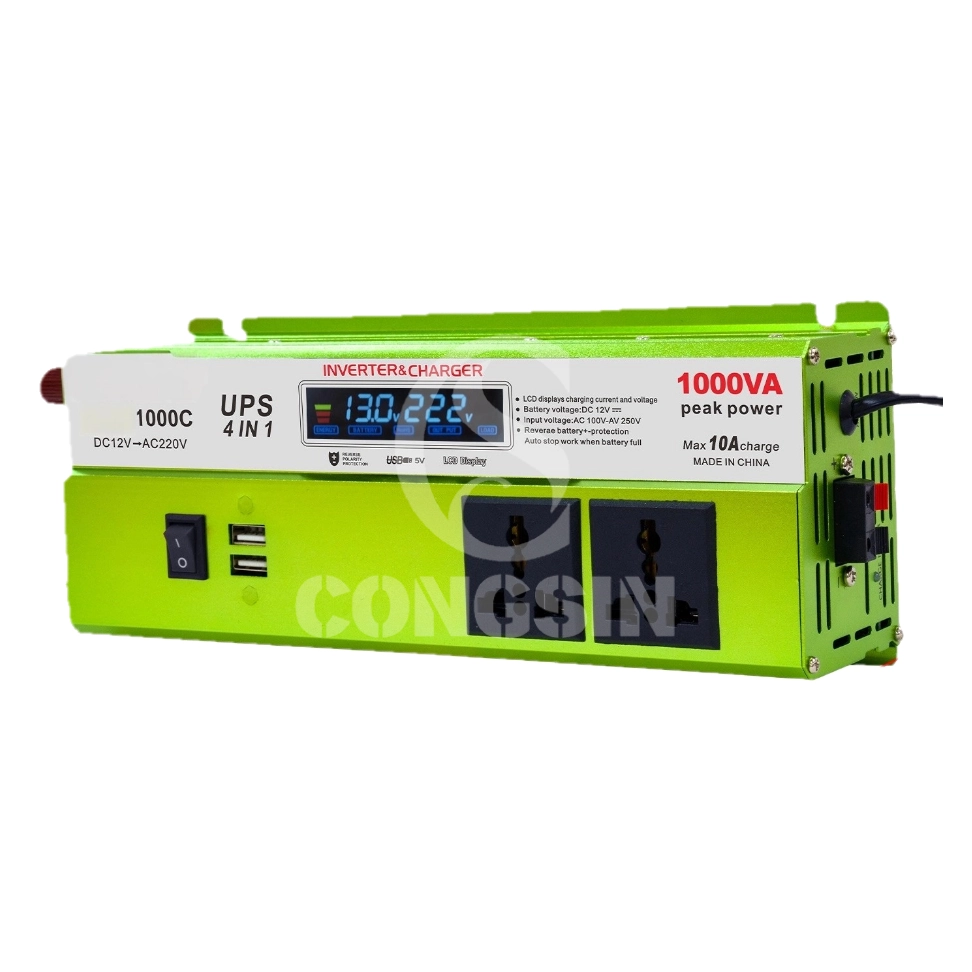
1000W 1500W 2000W UPS POWER INVERTER WITH CHARGER 10A 15A 20A DC TO AC 12v24v 110v 220V
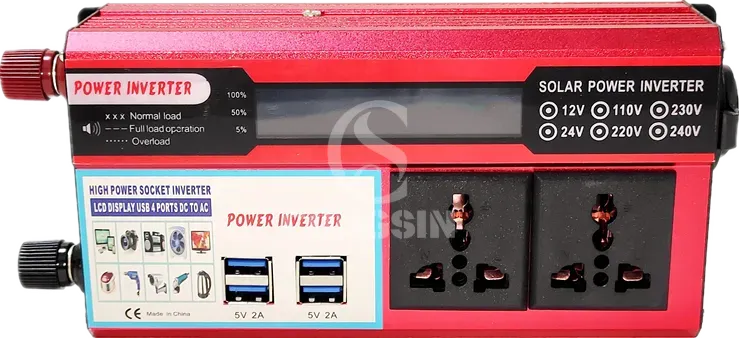
Congsin 500W Modified Sine Wave Inverter with LCD Display of Off Grid System Solar Power Inverter
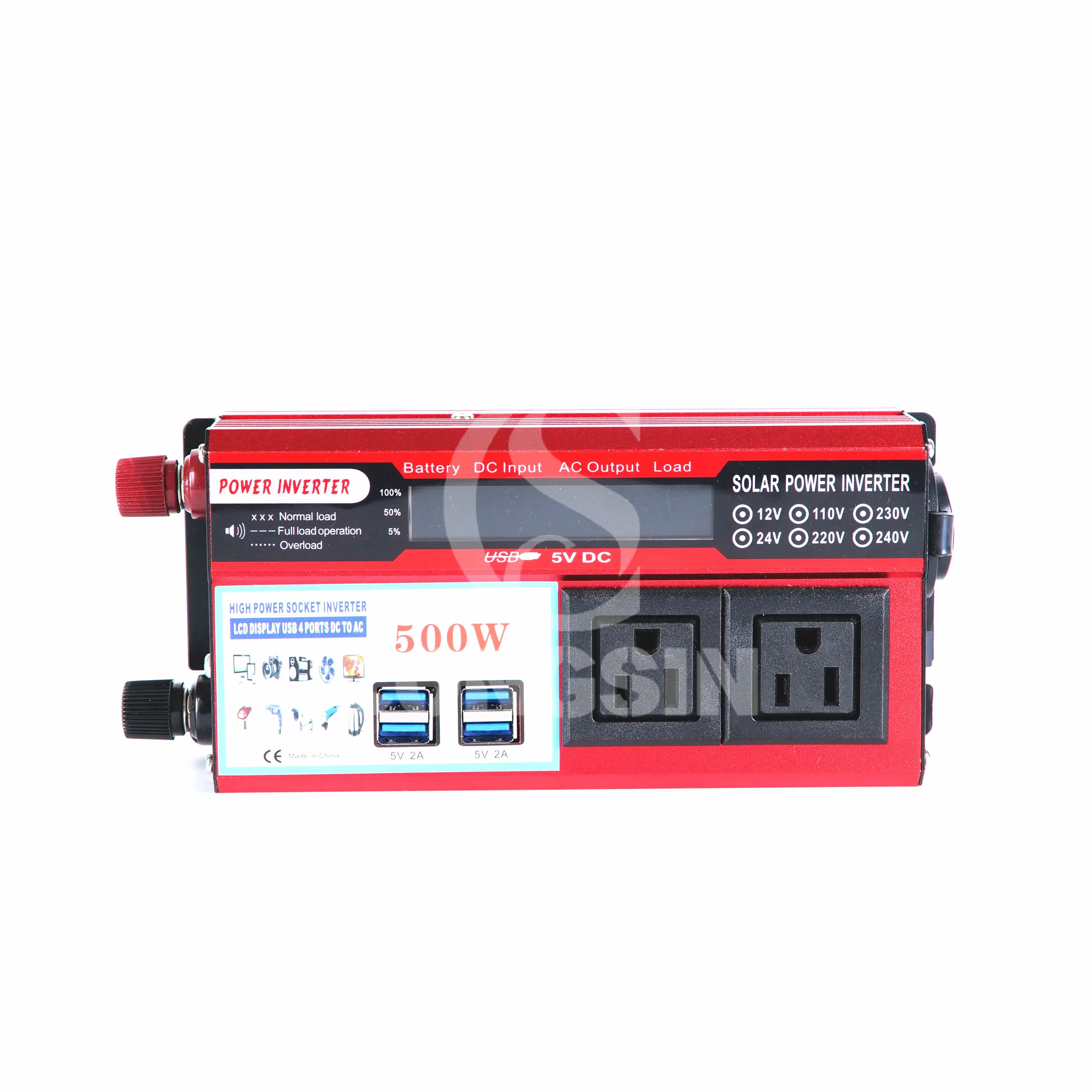
Congsin 500W modified sine wave power inverter US sockets 4 USB ports LCD display off grid
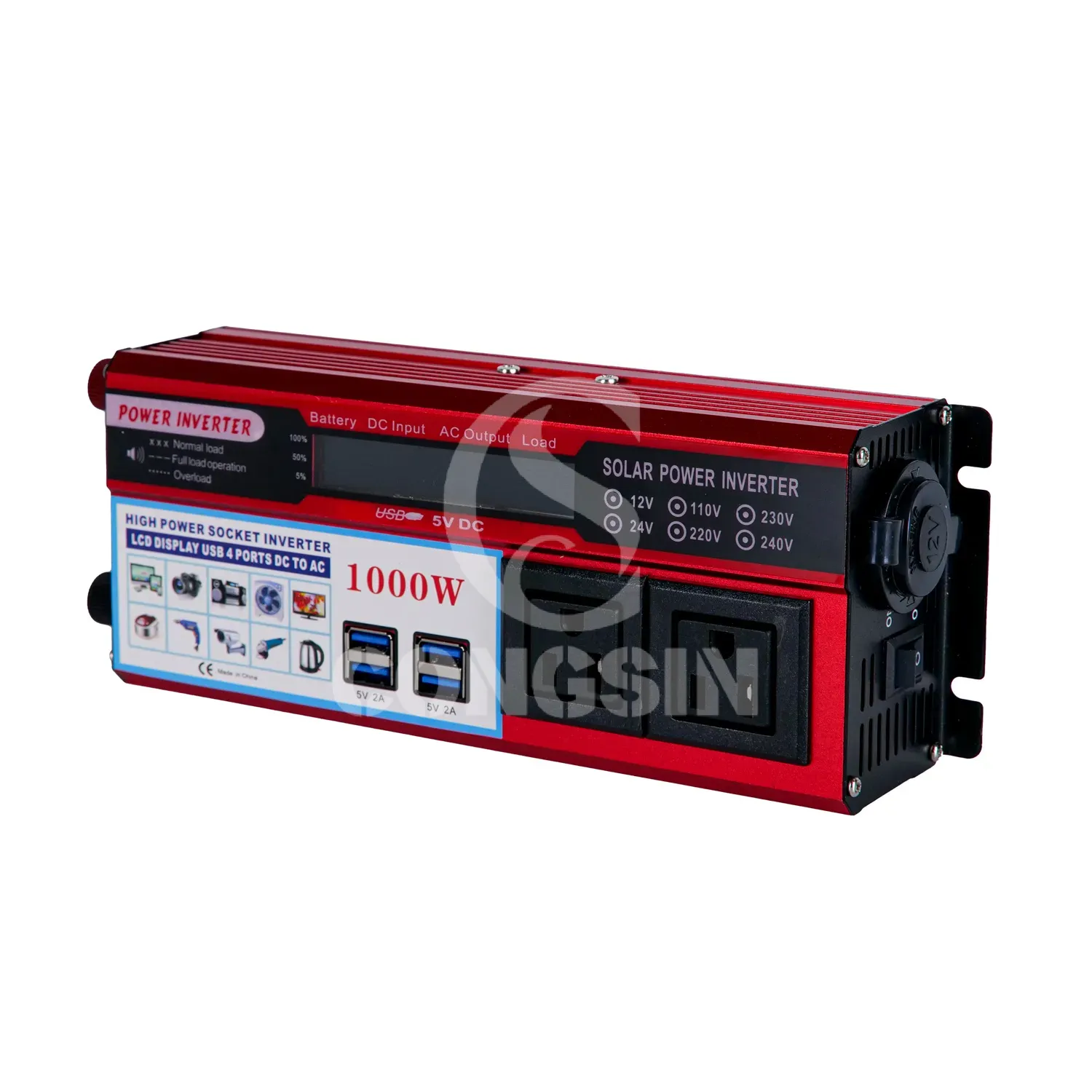
Congsin 1000W modified sine wave inverter with American Sockets and Lcd display portable 12V car RV

CONGSIN is a trusted OEM factory for power inverters, solar charge controllers, and DC converters. Reliable solutions for global B2B buyers.
 High Quality
 7/24 Service
 Guaranteed Warranty
© 2025 Congsin. All Rights Reserved.